

The Paradigm Shift: From Deterministic Bots to Probabilistic Agents
For years, Robotic Process Automation (RPA) has been the undisputed champion of enterprise efficiency. However, to prepare your stack for the future, you must first recognize the fundamental difference in how traditional bots and modern AI agents operate.
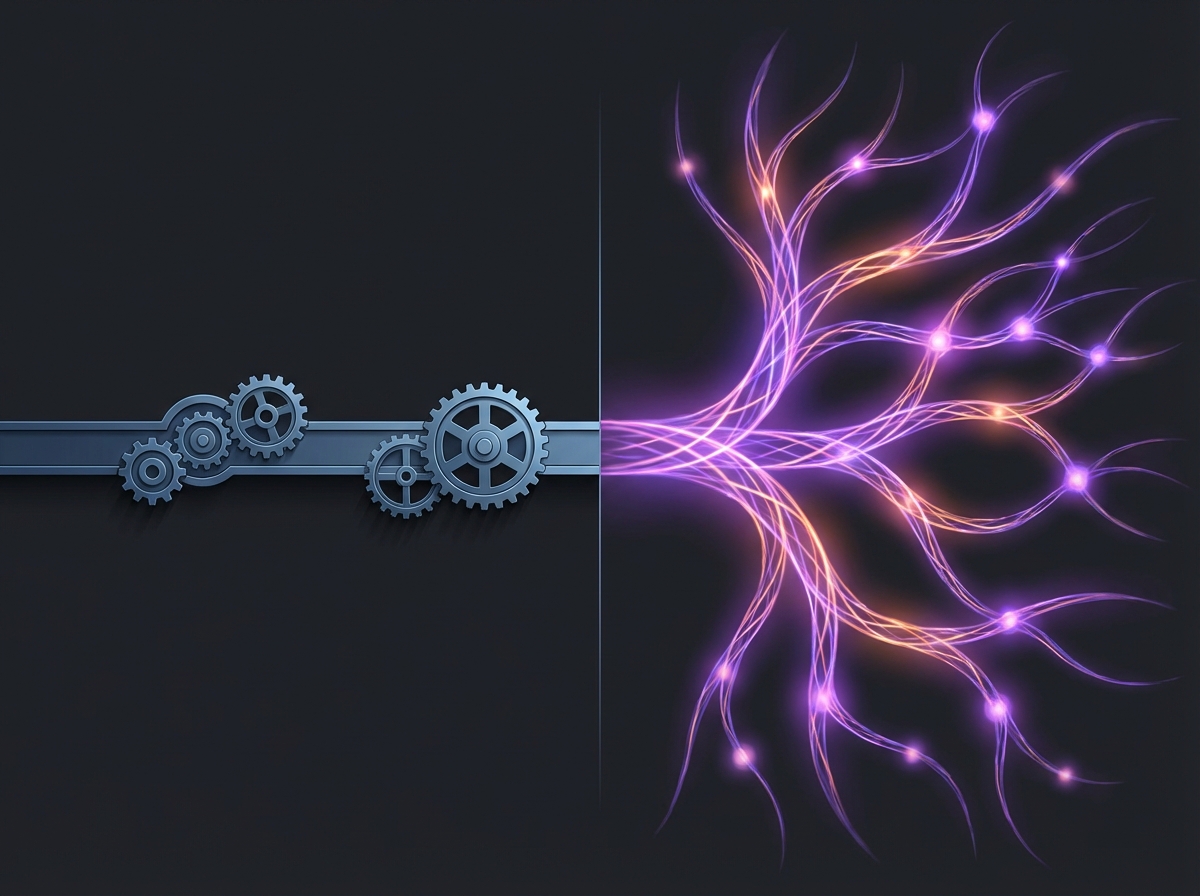
RPA is strictly deterministic. It relies on hard-coded "if-then-else" rules, rigid workflows, and often brittle UI scraping. When you deploy an RPA bot, you are giving it a fixed map. As long as the environment remains static, the bot performs flawlessly. But if a web page layout changes, an unexpected error pops up, or an input format varies slightly, the bot breaks. RPA does not think; it merely follows instructions.
Agentic AI introduces a probabilistic and goal-oriented approach to automation. Instead of feeding an AI agent a rigid, step-by-step script, you provide it with a high-level objective—such as "reconcile these vendor invoices against the latest bank statement and flag anomalies."
This marks a massive shift from blindly executing tasks to solving problems autonomously. Because they are probabilistic, AI agents do not need a perfect map to navigate your enterprise stack. They can dynamically manage their own workflows by:
- Formulating multi-step plans: Breaking down a complex, overarching goal into actionable, sequential steps on the fly.
- Adapting to errors gracefully: Recognizing when a step fails, analyzing the roadblock, and pivoting to an alternative solution without requiring human intervention.
- Handling unstructured context: Interpreting intent from emails, documents, and chat logs to make informed decisions rather than relying solely on strictly formatted databases.
Ultimately, transitioning from RPA to Agentic AI is much more than a software upgrade. It is an evolutionary leap from deploying fragile task executors to collaborating with resilient, autonomous problem solvers.
Architectural Prerequisites: Data, Context, and Composability
Unlike traditional RPA, which blindly follows static rules, Agentic AI requires a deep understanding of your business and a reliable way to interact with your systems. To unlock this capability, your enterprise stack needs a fundamental architectural upgrade. Agents do not just click buttons; they reason, plan, and execute based on real-time inputs.
Building this foundation requires a strategic shift in two core areas:
- Unified Data and Context: Agentic AI thrives on context. Fragmented, siloed data prevents agents from making informed, accurate decisions. Enterprises must transition away from isolated databases and adopt Retrieval-Augmented Generation (RAG) architectures powered by vector databases. This modern data layer allows agents to dynamically retrieve relevant unstructured and structured data—such as company policies, customer histories, or support documentation—in real-time, grounding their actions in your unique enterprise reality.
- Composable API Ecosystems: Legacy RPA relies heavily on UI-based automation and screen-scraping. This approach is notoriously brittle, as a minor interface update can break an entire workflow. Agentic AI demands robust, composable API ecosystems. Instead of mimicking human clicks, IT teams must expose system capabilities as native "tools" that agents can call directly. This programmatic access ensures reliable, deterministic execution without the fragility of UI dependencies.
By integrating unified RAG pipelines and establishing a composable API layer, you create a resilient technical environment. This infrastructure guarantees your AI agents have the precise context they need to think, and the reliable tools they need to act autonomously at scale.

Redefining Governance: Security and Human-on-the-Loop
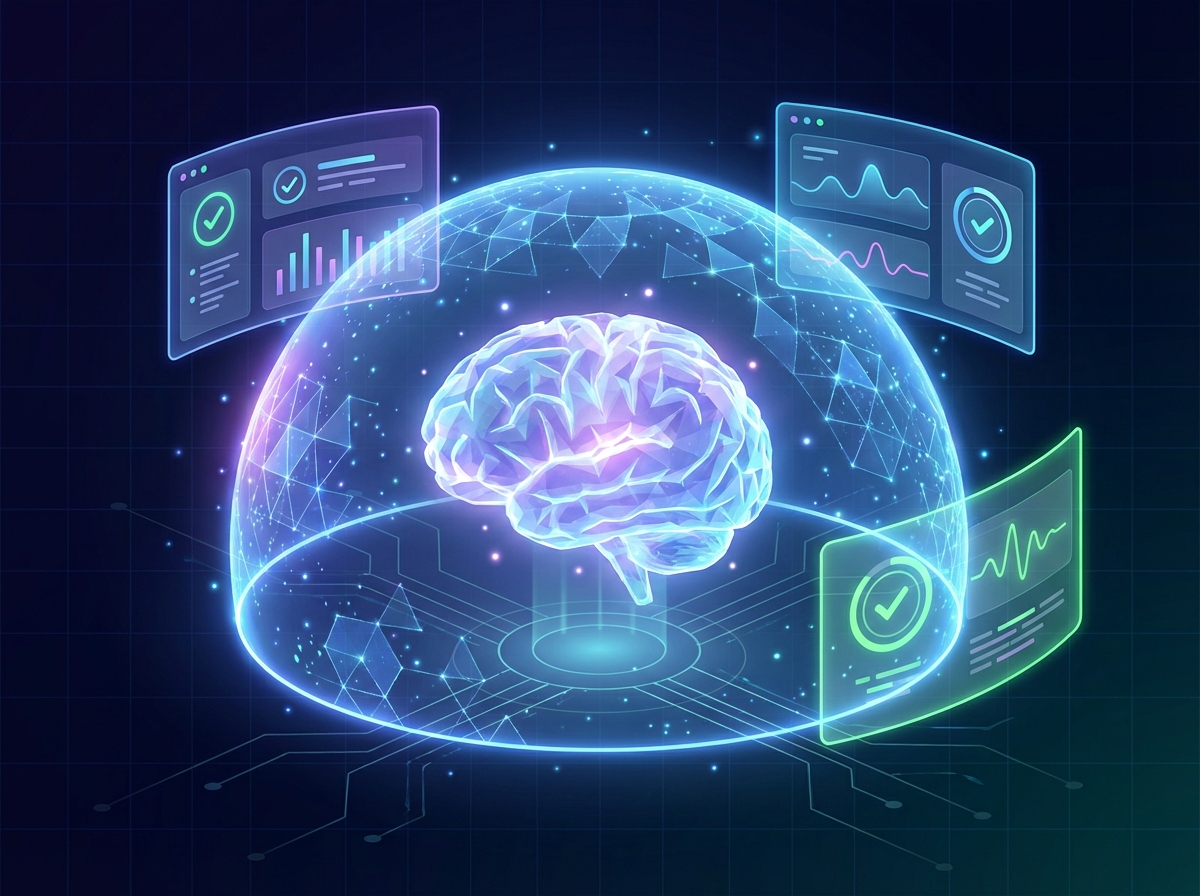
As enterprises transition from rigid RPA to goal-driven Agentic AI, the inherent risks of autonomous execution multiply. Traditional bots follow predictable, hard-coded scripts, but AI agents make independent decisions to achieve their objectives. Consequently, enterprise governance must evolve beyond standard IT access controls. Relying on simple service accounts and static permissions is no longer enough. Organizations must establish dynamic, context-aware guardrails that restrict an agent's operational boundaries in real-time.
To secure this new frontier, IT and security leaders must rethink identity and access management for non-human actors. This requires two critical capabilities:
- Granular, Role-Based Access (RBAC): Treat AI agents as digital employees. They should be granted least-privilege access, ensuring they can only interact with the specific data and systems necessary to execute their assigned tasks.
- Chain of Thought Logging: True governance requires total transparency. By logging an agent's "Chain of Thought," security teams gain a real-time, auditable trail of every decision, API call, and logic branch. If an agent takes an unexpected action, auditors can see exactly why the decision was made.
This leap in autonomy also triggers a fundamental shift in human-machine collaboration. We are moving away from the traditional Human-in-the-loop model, where an employee is an active participant required to click buttons, approve minor steps, or bridge gaps between disconnected systems.
Instead, Agentic AI introduces the Human-on-the-loop paradigm. In this model, humans act as strategic overseers rather than manual operators. The AI executes the end-to-end process independently within its guardrails. Human workers monitor performance dashboards, refine strategic goals, and only step in to handle complex exceptions or ethical edge cases. This approach safely unlocks the massive scale of autonomous AI while keeping control firmly in human hands.
A Strategic Roadmap for Migration
Transitioning from rigid robotic process automation to agentic AI requires more than just a software upgrade. It demands a fundamental shift in how your enterprise approaches automation. Enterprise leaders need a structured, deliberate path forward to ensure a smooth evolution without disrupting critical operations.
To successfully navigate this transition, follow these actionable steps:
- Target High-Value, High-Exception Workflows: Start where traditional RPA currently struggles. Look for processes that frequently break due to unstructured data, edge cases, or the need for cognitive leaps. These complex bottlenecks are the perfect proving ground for AI agents.
- Run Bounded Pilot Programs: Resist the urge to rip and replace your entire automation infrastructure overnight. Instead, deploy agentic AI in carefully controlled pilot programs. This minimizes enterprise risk while allowing your team to test the AI's reasoning capabilities within safe, measurable parameters.
- Upskill Your Center of Excellence (CoE): Transform your Automation CoE to meet the new technological reality. Your team must pivot from writing rigid, rule-based scripts to prompting, guiding, and managing autonomous agents. Invest in training your developers in prompt engineering, AI governance, and agentic orchestration.
- Redefine Your Automation KPIs: Traditional RPA metrics like sheer task speed or bot utilization are no longer sufficient. Shift your key performance indicators to focus on autonomous resolution rates, decision accuracy, and the reduction of human-in-the-loop interventions. Measure the quality of the outcome rather than just the speed of the task.
By following this roadmap, you can systematically replace fragile bot ecosystems with resilient, intelligent agents that actively understand and adapt to the work they are doing.



sprintpark
tejaswinidigi@gmail.com