
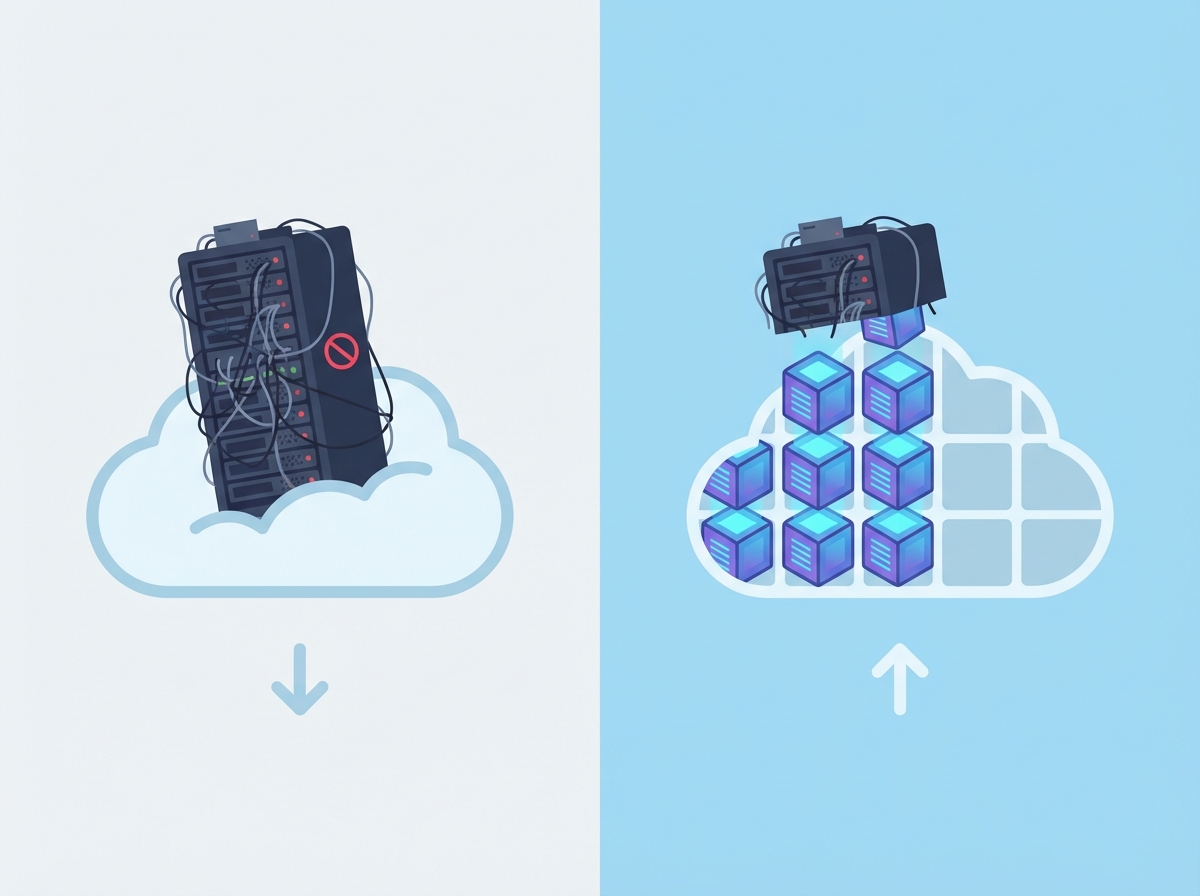
The Technical Debt Trap of Lift-and-Shift
For years, the "lift-and-shift" strategy—rehosting applications without modifying their architecture—was sold as the fastest route to the cloud. While it offers speed, it often creates a dangerous illusion of modernization. By simply moving virtual machines from an on-premise data center to a cloud provider, organizations fail to unlock the elasticity, resilience, and operational speed that make the cloud valuable.
The result isn’t a modern platform; it is usually a more expensive version of the legacy environment. This approach preserves the flaws of the original architecture, compounding technical debt in a new location. Several critical pain points inevitably emerge:
- Inherited Security Vulnerabilities: When you move a VM "as-is," you also migrate outdated operating systems, unpatched libraries, and legacy configurations. The cloud provider secures the hardware, but the application remains as vulnerable as it was on-premise.
- Bloated Infrastructure Costs: Legacy applications are rarely designed for auto-scaling. Consequently, teams must over-provision resources to handle peak loads, running high-performance instances 24/7 rather than leveraging cost-effective, pay-as-you-go serverless or containerized models.
- The Monolith Persists: A lifted application remains a tight coupling of dependencies. Decoupling these components manually to take advantage of microservices is an agonizingly slow, error-prone process that often stalls indefinitely due to fear of breaking the system.
Ultimately, treating cloud migration as a mere change of address ignores the fundamental shift required for digital agility. To escape this trap, engineering teams must pivot from simple relocation to intelligent modernization—a process that requires deep code analysis and refactoring capabilities that manual efforts struggle to sustain.
How Agents Map and Decouple Dependencies
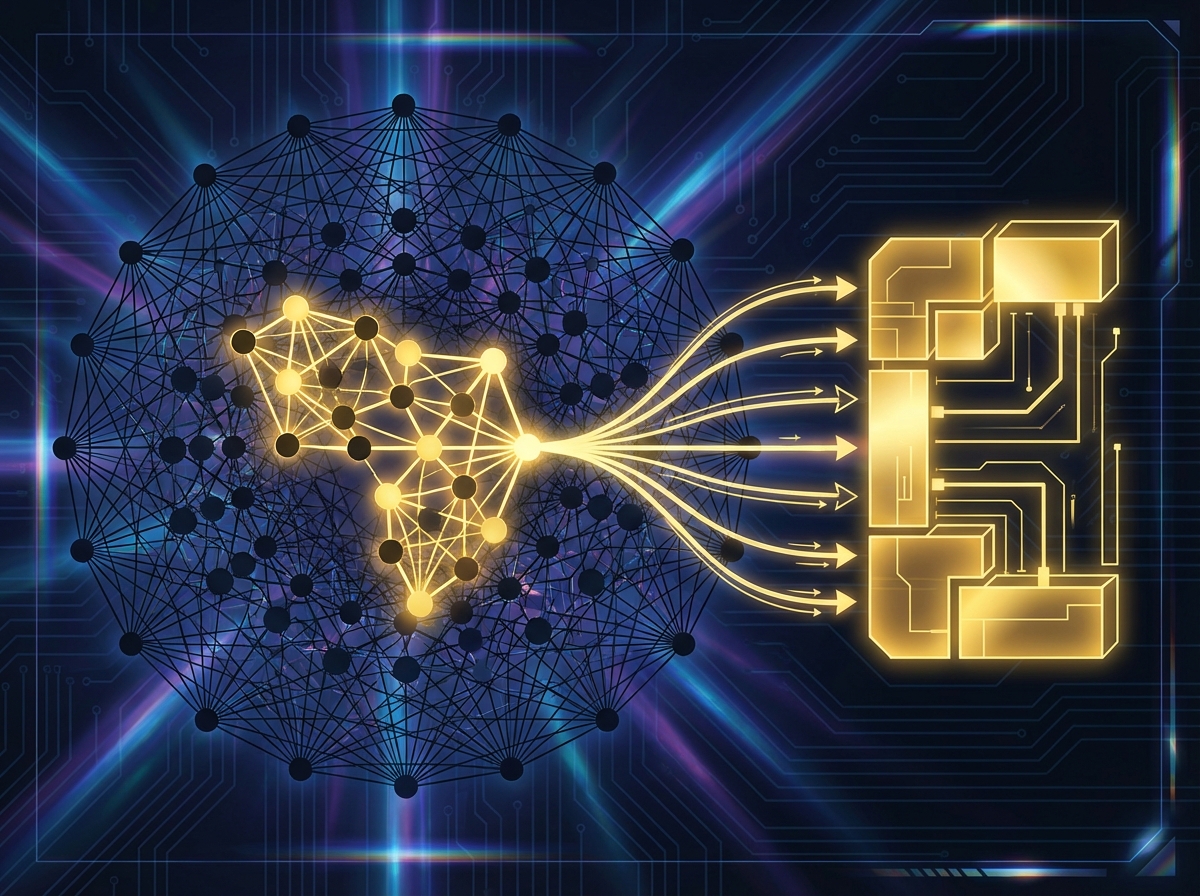
At the heart of modern refactoring is the agent's ability to ingest an entire code repository—not merely as unstructured text, but as a dynamic, semantic graph. Unlike traditional static analysis tools that simply look for syntax patterns, Agentic AI parses abstract syntax trees (ASTs) and data flows to build a comprehensive mental model of the application. It understands that a variable in a billing module isn't just a string of characters, but a critical dependency linked to user account tables and payment gateway logic.
Once this deep understanding is established, the agent begins the complex work of identifying "bounded contexts" within the monolith. It looks for natural seams in the codebase where high cohesion exists—clusters of functions and data models that operate together to fulfill a specific business domain, such as inventory management or order processing. By visualizing these clusters, the agent can distinguish between core domain logic and the entangled spaghetti code that holds the monolith together.
The process of dependency mapping goes far deeper than simply listing file imports. The agent actively hunts for fragility, locating:
- Hard-coded database connections: Identifying where connection strings or SQL queries are scattered across unrelated files rather than centralized.
- Tight coupling: Detecting classes that bypass public interfaces to access private members of other components.
- Shared state risks: Mapping global variables or shared utility libraries that could cause cascading failures if one component is extracted.
To sever these ties without breaking application logic, the agent proposes specific, code-level refactoring strategies. Instead of vaguely suggesting "decoupling," it generates the actual shim code or interface wrappers required to isolate a service. For example, if Module A directly reads Module B’s database tables, the agent might propose creating an API layer for Module B, rewriting Module A’s calls to use that API, and generating the necessary integration tests to ensure the behavior remains identical before and after the split.
Defining Agentic AI: From Copilot to Autonomy
To understand the future of cloud refactoring, we must first distinguish between standard Generative AI—like chatbots and autocomplete assistants—and the emerging class of Agentic AI. While a standard Large Language Model (LLM) acts as an incredibly knowledgeable encyclopedia or a fast typist, it is fundamentally passive. It waits for your input, generates a response, and then stops. It has no concept of a broader objective or the state of your environment.
Agentic AI introduces the concept of agency. Rather than simply predicting the next token in a sentence, an AI agent operates as a loop that perceives, reasons, and acts to achieve a high-level outcome. To successfully navigate complex tasks like code refactoring, these agents rely on a specific set of capabilities:
- Multi-step Planning: Instead of needing a prompt for every line of code, an agent breaks a complex goal (e.g., "Decouple the user authentication logic") into a sequence of executable steps.
- Tool Access: Agents can interact with the outside world. They can read the file system, run command-line interface (CLI) tools, execute test suites, and commit changes to version control.
- Contextual Memory: Unlike a chatbot that might forget the beginning of a conversation or lack access to other files, an agent maintains a working memory of the codebase structure and dependency graph.
- Self-Correction Loops: Perhaps the most critical feature is the ability to recover from failure. If an agent refactors a module and the build fails, it reads the error log, adjusts the code, and retries until the build passes.
The distinction becomes clear in practice. In the copilot era, a developer prompts an LLM to generate a function, copy-pastes it into the IDE, runs the compiler, sees an error, and prompts the LLM again with the error message. In the agentic era, the developer assigns a goal: "Extract this legacy module into a separate service." The agent figures out the necessary file moves, updates the imports, attempts the build, and fixes its own mistakes—freeing the human developer to focus on architecture and strategy rather than syntax and implementation details.
The Human-Agent Loop: Governance and Validation
The single biggest barrier to adopting Agentic AI in cloud modernization isn't technical capability—it is the very real fear of "AI breaking production." There is a natural hesitation to hand over the keys to critical infrastructure. However, the most successful implementations of agentic workflows do not remove humans from the equation; they elevate them.
In this new paradigm, the AI agent acts as a tireless junior engineer, while the human architect assumes the role of the executive reviewer. The agent handles the heavy lifting of dependency mapping, code translation, and infrastructure-as-code generation, but it does not deploy blindly. Instead, it presents a comprehensive refactoring plan for approval.
This workflow creates a robust governance loop where the division of labor is clear:
- The Agent analyzes the legacy codebase, identifies coupled logic, and generates the microservices code along with the necessary integration tests.
- The Human validates that the proposed architectural boundaries align with business domains and reviews the generated test suites to ensure edge cases are covered.
By shifting the human focus from writing boilerplate code to validating architectural decisions, Agentic AI acts as a massive force multiplier. It liberates senior engineers from the grunt work of syntax translation, allowing them to focus entirely on system design, logic verification, and strategic optimization.